
The retirement date is circled on the calendar. Social Security can wait, the mortgage is manageable, and the portfolio work looks reasonable. Then someone asks the question that can move the whole date: “What are we doing for health insurance until Medicare?”
Retiring at 62 creates a coverage bridge that may last several years. The bridge is not only the monthly premium. It includes eligibility, enrollment dates, household income, deductibles, provider networks, prescriptions, HSA timing, and the handoff to Medicare.
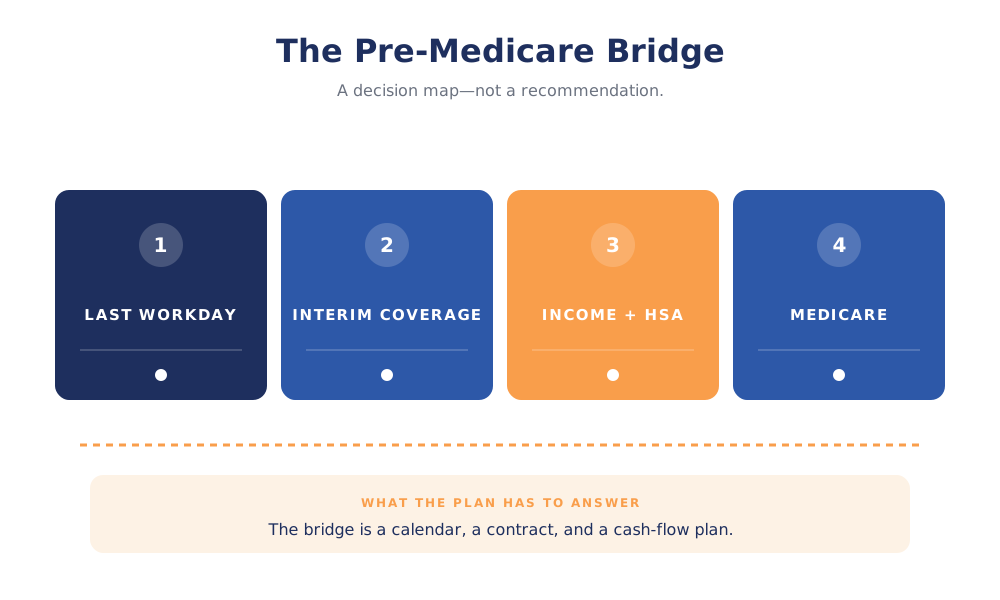
Put every household member on the calendar
Start with dates, not products:
- last day of active employment;
- last day of active-employer coverage;
- age and Medicare eligibility date for each spouse;
- any spouse’s employment and group-plan eligibility;
- COBRA election and coverage dates if available;
- retiree-health eligibility if offered; and
- enrollment windows for individual coverage and Medicare.
Couples often have different dates. One spouse may reach Medicare while the other remains on an individual or employer plan. Build separate coverage rows, then show the combined household cost.
Compare actual coverage paths
Possible bridge sources may include a spouse’s active-employer plan, COBRA, employer retiree coverage, or an individual policy through Covered California or another insurer. Each has different premiums, provider networks, prescription coverage, deductibles, out-of-pocket exposure, and duration.
Covered California identifies loss of health insurance—often from a change in employment—as a common event that may permit special enrollment. Do not wait until after coverage ends to discover documentation or timing requirements. Obtain written plan options and enrollment dates before the retirement notice becomes irreversible.
COBRA can continue familiar coverage for a period, but it is not active-employment coverage for every Medicare rule. Medicare explains that the Part B special-enrollment period is tied to current employment or active-employer coverage, not the later end of COBRA.
Coordinate taxable income with coverage
Marketplace premium-tax-credit eligibility and reconciliation depend on household income and other requirements. Taxable 401(k) or IRA withdrawals, wages, business income, capital gains, and other items may affect the calculation.
That means the health-coverage decision and the retirement-withdrawal decision should not be modeled in separate rooms. A larger taxable distribution may fund spending while also changing the household’s marketplace estimate. A lower-income year may create different tax and coverage interactions.
Use current Covered California estimates and coordinate income assumptions with a qualified tax advisor. Do not treat an advance premium credit as final until the tax return reconciles it under the applicable rules.
Include the costs that are not premiums
For each coverage path, list:
- annual premiums;
- deductible and out-of-pocket limit;
- expected prescription costs;
- provider and hospital network;
- services or medications requiring authorization;
- out-of-area or travel coverage; and
- cash reserves for a high-use year.
The lowest premium may not produce the lowest household cost. The most familiar network may not remain available. The purpose is not to predict medical care. It is to understand the financial exposure the contract assigns to the household.
Coordinate the Medicare and HSA handoff
Medicare enrollment is not always automatic, and late-enrollment consequences can apply. The rules depend on current-employment coverage, employer size, enrollment timing, and other facts. Confirm the exact path with Medicare and the benefits administrator.
HSA contributions require separate attention. Medicare states that people applying after 65 may receive retroactive Part A coverage and advises stopping HSA contributions in advance in relevant circumstances. Our article “I’m Turning 65 and Still Working. When Do My HSA Contributions Need to Stop?” explains that coordination in more detail.
Record the final eligible contribution month, employer contributions, payroll timing, Medicare application date, and coverage effective date. Review them with the HSA custodian and tax advisor before the final payroll contributions occur.
Decide whether the bridge changes the retirement date
Once the written coverage comparison is complete, place it back into the retirement plan. Ask:
- Can recurring income and planned withdrawals fund the premiums and expected cost sharing?
- Is there a separate medical reserve?
- Does the plan still work if assistance is lower than estimated?
- Would one additional employment year materially change coverage or savings?
- Can part-time work provide eligible group coverage, and under what terms?
- What happens when one spouse reaches Medicare first?
These questions do not assume that working longer is better. They make the tradeoff visible before the household gives up employer coverage.
The years before Medicare are not a blank space. They are a coverage, income, and enrollment plan with dates that have to agree.
What to consider next
Request the employer’s written termination and coverage documents. Price the actual alternatives using the same household and provider information. Create a month-by-month calendar through the later spouse’s Medicare start, and pair it with the retirement-income schedule.
Then verify special-enrollment, HSA, and Medicare dates with the responsible institutions and qualified professionals. Keep confirmation numbers, notices, and plan documents with the retirement records.
Sources
- Loss of employer health insurance can create a Covered California special-enrollment opportunity — Covered California, What Is Special Enrollment?
- Medicare enrollment rules after employment or employer coverage ends — Medicare.gov, Working Past 65
- Premium tax credit eligibility and reconciliation depend on household income and advance-credit information — Internal Revenue Service, Questions and Answers on the Premium Tax Credit
- HSA contribution eligibility ends with Medicare enrollment and retroactive Part A can affect contribution timing — Medicare.gov, Working Past 65