

The first retirement month arrives without a paycheck. Cash is available in the bank, a brokerage account, a 401(k), two IRAs, and a Roth account. Every account can fund the same grocery bill—but not with the same tax, market, or future consequences.
The question is not “Which account do retirees spend first?” It is “Which source fits this year’s spending, tax position, reserves, benefits, and market conditions without creating an avoidable problem in the next year?”
Start with a five-year calendar
List the events that change the household’s income or account rules:
- final wages, bonus, severance, or unused leave;
- employer-plan distribution eligibility;
- health coverage and Medicare dates;
- Social Security options for each spouse;
- pension or deferred-compensation starts;
- large property, travel, or family commitments;
- required distributions; and
- charitable-giving plans.
The first retirement year is often not a clean low-income year because employment income may still be present. A later year may add Social Security or Medicare. Another may introduce required distributions. One permanent withdrawal order ignores those transitions.
Give cash and reserves a defined job
Separate operating cash from strategic account decisions. Keep enough available for ordinary bills, known near-term expenses, tax payments, and the reserve policy established in the retirement plan.
That reserve can reduce the need to sell assets during an uncomfortable market period. It can also keep a roof replacement or family commitment from becoming an unplanned taxable distribution.
Our article “The First Five Years Decide the Next Twenty-Five” explains the risk created when withdrawals and early market declines arrive together. The account-sequencing plan should show which spending is already funded and which assets would need to be sold under different conditions.
Separate tax character before choosing an account
Build an account inventory with four columns:
- available balance and liquidity;
- tax character—cash, taxable basis and gains, pretax, Roth, or after-tax plan basis;
- distribution and withholding rules; and
- the investment exposures that would be sold.
A taxable-account sale may realize gains or losses. A traditional 401(k) or IRA distribution is generally included in taxable income. A qualified Roth distribution follows different rules. Employer stock, annuities, inherited accounts, and after-tax basis can require separate treatment.
Do not choose by account label alone. Verify basis, restrictions, and tax reporting with the custodian, plan administrator, and tax advisor.
Put Social Security and Medicare on the same page
Social Security claiming changes the amount the portfolio must fund and may affect survivor income. It can also interact with federal taxation depending on other income.
Medicare uses income-related premium rules that can make a large taxable event relevant beyond the current tax bill. The applicable lookback, thresholds, and appeal rules should be verified for the year at issue.
This does not mean minimizing annual income at any cost. It means the withdrawal schedule should display:
- taxable income before withdrawals;
- proposed taxable distributions or gains;
- Social Security and pension income;
- Medicare-related income considerations; and
- estimated federal and California tax payments.
Review future required distributions before they arrive
The IRS generally requires traditional IRA owners to begin required distributions under the applicable age rules, while defined contribution plans can follow different timing in some circumstances. Roth accounts follow their own framework.
For someone retiring several years before required distributions, the intervening years may provide choices about pretax withdrawals, charitable distributions once eligible, or Roth conversions. Each has separate requirements and consequences. A conversion is not just another withdrawal and carries the project’s required Roth disclosure and professional-coordination duty.
The purpose of the five-year map is to see future forced income before making today’s decision—not to fill an assumed tax bracket automatically.
Let the order change when the facts change
A useful sequence is conditional rather than permanent. For example:
- normal year: fund spending from the planned source and rebalance under the written policy;
- market decline: use designated reserves and review discretionary spending before selling depressed assets;
- large tax year: coordinate gains, distributions, withholding, and charitable activity;
- major purchase: decide whether liquidity or tax cost is the binding constraint; and
- benefit transition: revise the source mix after Social Security, Medicare, or a pension begins.
These are review rules, not automatic instructions. The right source can change with markets, tax law, health, spending, and family decisions.
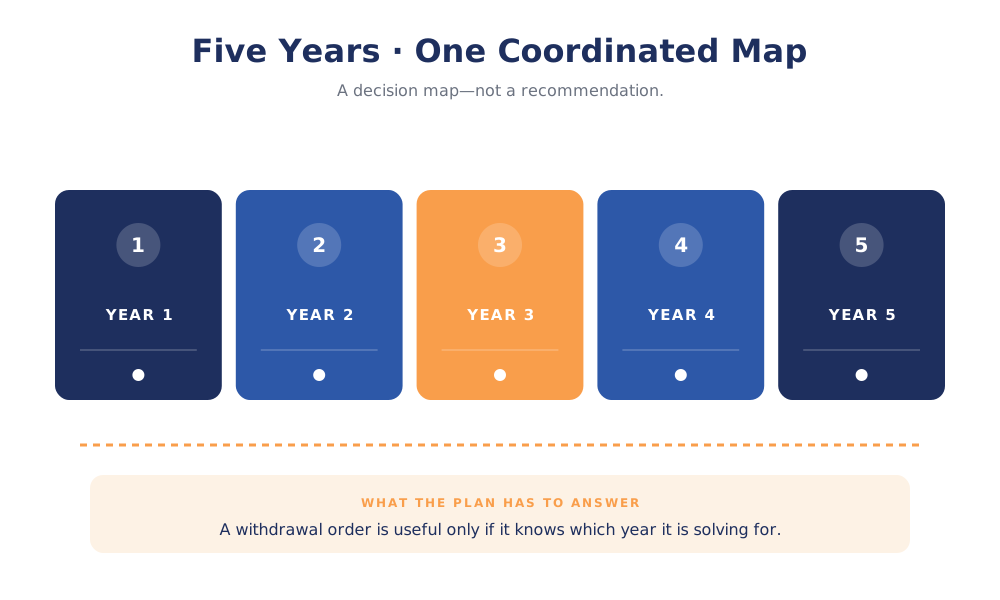
A withdrawal order is useful only if it knows what year it is solving for.
What to consider next
Create five annual columns. Add expected spending, benefits, tax-sensitive events, health-coverage dates, major expenses, and required distributions. Then assign a proposed funding source and a backup source to each year.
Review the schedule annually and whenever a major trigger occurs. Coordinate tax estimates and withholding with a CPA or qualified tax advisor, benefits with the relevant agencies or specialists, and investment sales with the household’s written investment process.
Sources
- Taxation and withholding of qualified-plan and pension distributions — Internal Revenue Service, Publication 575, Pension and Annuity Income
- IRA distribution taxation, withholding, and required-distribution framework — Internal Revenue Service, Publication 590-B, Distributions from Individual Retirement Arrangements
- RMD differences between IRAs and defined contribution plans, including the age-73 framework — Internal Revenue Service, RMD Comparison Chart
- Social Security claiming and household retirement-benefit planning — Social Security Administration, Plan for Retirement
- Income-related Medicare premium framework — Medicare.gov, Medicare Costs