

The statement arrives every year, but the answer to a basic question is still missing: what are we paying for, and which benefits would disappear if we changed the contract?
An annuity cost review is not a hunt for one expense ratio. It is a map of explicit charges, contract limits, access costs, optional features, and replacement consequences.
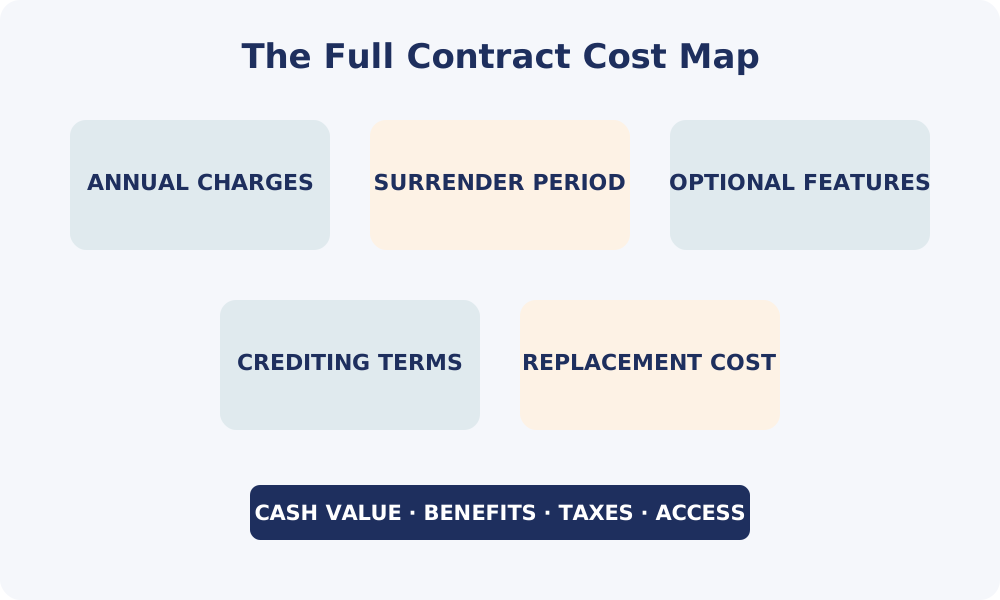
Start with five documents
Gather the contract, current statement, surrender schedule, rider pages, and any prospectus or current disclosure document. Add basis and beneficiary records. The annual statement alone may not explain the full economics.
Separate visible charges from contract economics
Variable annuities may include mortality and expense risk charges, administrative charges, investment-option expenses, and charges for optional features. FINRA notes that annuities may also involve commissions and surrender charges.
Fixed and indexed contracts may present costs differently. A cap, participation rate, spread, renewal term, or restricted access can affect the result without appearing as a conventional annual fee. Ask how the insurer and seller are compensated and how much of the premium is available as surrender value today.
Read the surrender schedule as a calendar
Record the charge for each contract year, the anniversary date, any permitted withdrawal amount, and how a withdrawal affects benefits. A “free withdrawal” may still have tax consequences or reduce a benefit base.
For Orange County retirees, place the schedule beside expected property work, tax payments, care needs, and family commitments. The contract may be long term while the household’s next large cash need is not.
Price optional features separately
Identify each rider, its charge, its benefit base, the conditions for maintaining it, and the events that activate it. Then ask whether the household still values that job. Paying for a feature is different from receiving cash from it.
Treat replacement as a new decision
Replacing an annuity can restart a surrender period, change benefits, create new costs, and affect taxes. California’s Department of Insurance tells consumers to request a full list of benefits and drawbacks before replacing a contract.
Compare the old and new contracts line by line: surrender value, new premium, benefits lost, benefits gained, annual charges, crediting terms, access, death benefit, issuer, compensation, and tax consequences. “Newer” is not a planning conclusion.
What to consider next
Ask the insurer for current values in writing: cash surrender value, contract value, benefit bases, death benefit, annual charges, surrender schedule, and available choices. Have the licensed insurance professional explain each item, then coordinate the decision with the household’s financial and tax plan.
The cost of an annuity is the combination of what leaves the contract, what limits the contract, and what the household gives up to keep it.
Sources
- Annuity fees, expenses, optional features, commissions, and surrender charges — FINRA, Annuities
- Variable-annuity mortality and expense, administrative, investment, optional-feature, and surrender charges — SEC Office of Investor Education and Advocacy, Updated Investor Bulletin: Variable Annuities
- California guidance on surrender periods, withdrawals, replacements, commissions, and senior free-look rights — California Department of Insurance, Annuities: What Seniors Need to Know