

The proposals are on the table. One says “fixed.” Another says “fixed indexed.” Both sound steady, both show an interest-crediting story, and neither makes it obvious what the household is giving up in exchange.
The useful comparison is not which label sounds better. It is how each contract credits interest, limits access, assigns risk, and fits the rest of the retirement balance sheet.
Start with the job, not the product
Define the problem first. Is the money intended for near-term spending, a later income date, a conservative reserve, or a legacy goal? Money needed for emergencies should not be evaluated the same way as money assigned to a long horizon.
For Orange County households, a valuable home can coexist with uneven liquid cash. That makes access especially important. A contract may offer attractive terms and still be a poor match for money that could be needed for property work, care, taxes, or family support.
How a fixed annuity credits interest
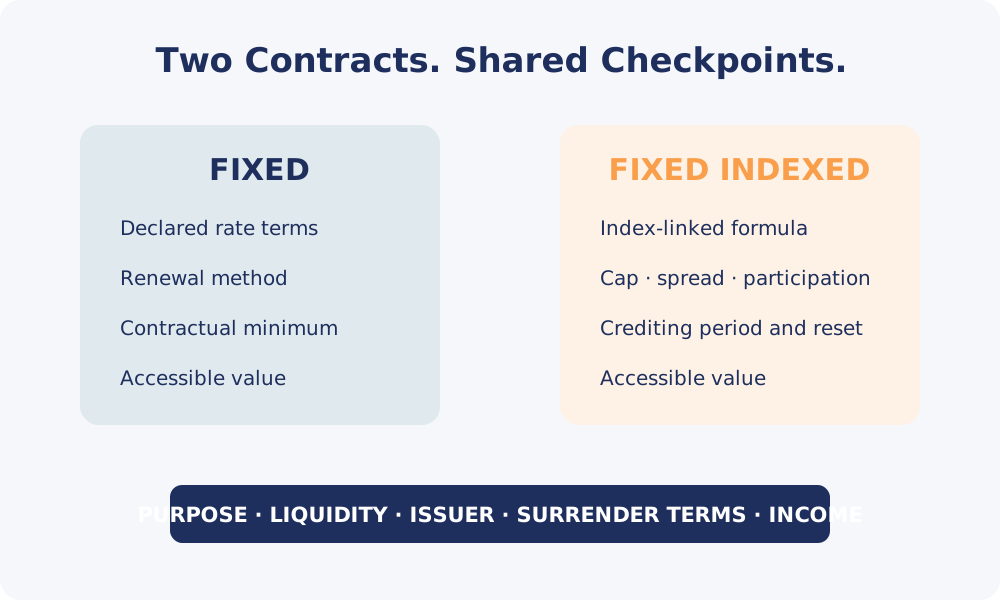
A fixed annuity credits interest under terms established by the insurer. The initial rate may apply for a stated period, after which a renewal rate may change subject to the contract. Ask for the minimum contractual rate, the current rate, the length of each rate period, and the exact renewal process.
The central question is not merely “What is today’s rate?” It is “Which rate is contractual, for how long, and what happens next?”
How a fixed indexed annuity credits interest
A fixed indexed annuity generally links credited interest to an external market index without directly investing the owner in that index. The formula may use a cap, participation rate, spread, averaging method, or other adjustment. Dividends may not be included. Terms can differ by crediting option and may reset.
The SEC describes indexed annuities as complex products and advises reading the contract and, where applicable, the prospectus. A positive index year does not translate automatically into the same percentage credited to the contract. The formula decides.
Ask the professional to walk through the formula using several market paths, including a flat period and a decline. The purpose is comprehension, not a return forecast.
Compare the same seven facts
Put both contracts on one page:
- issuing insurer and financial-strength information;
- contractual minimums and current declared terms;
- indexed formula, if applicable;
- surrender period and charge schedule;
- permitted withdrawals and exceptions;
- income and death-benefit choices; and
- optional features, conditions, and costs.
FINRA notes that annuities can carry liquidity, issuer, inflation, and interest-rate risks. Those risks do not disappear because the word “fixed” appears in the name.
Separate accumulation value from income value
Some proposals emphasize account value. Others emphasize an income base or benefit value. Those figures may not be interchangeable or available as a lump sum. Ask which number is cash value, which number is used only to calculate income, and what happens to each after a withdrawal.
If income is the objective, compare the actual payout choices at the intended start date. If liquidity is the objective, focus on accessible value and surrender terms. One illustration should not be asked to answer two different questions.
What to consider next
Build a one-page contract map before choosing. Record the purpose, time horizon, accessible cash, rate mechanics, reset rights, surrender terms, income choices, beneficiary terms, and issuer. Then compare that map with the household’s liquid reserves and other retirement income.
California’s Department of Insurance urges senior buyers to understand the contract, avoid pressure, review surrender deadlines, and use the applicable free-look period. Those are not formalities. They are part of the decision.
The right annuity question is not “Which label wins?” It is “Which contract facts fit the job this money actually has?”
Sources
- California consumer guidance on fixed and equity-indexed annuities, surrender terms, issuer review, and senior free-look rights — California Department of Insurance, Annuities: What Seniors Need to Know
- Indexed-annuity crediting methods, limits, complexity, and issuer risk — SEC Office of Investor Education and Advocacy, Updated Investor Bulletin: Indexed Annuities
- Annuity types, liquidity, issuer, inflation, and interest-rate risks — FINRA, Annuities