
The retirement packet arrives with a short list of choices and a long rollover form. Moving the account into an IRA looks like the obvious cleanup step. But the form does not tell you which plan features disappear when the money leaves—or whether those features matter to your household.
A rollover is a transaction. The decision is a comparison of two operating environments: the current employer plan and the proposed IRA.
In August 2026, the IRS issued new optional sample forms and proposed procedures intended to simplify direct rollovers. Simpler paperwork is welcome. It does not make the planning choice automatic.
Begin with the actual plan, not a generic 401(k)
Request the current documents and data:
- summary plan description and distribution notice;
- participant fee disclosure and recent statement;
- investment menu, expense information, and any brokerage option;
- rules for installments, partial withdrawals, and required distributions;
- treatment of loans, after-tax contributions, and designated Roth money;
- beneficiary and spousal-consent rules; and
- availability of support after employment ends.
Some plans have low-cost institutional investments and flexible withdrawals. Others have a narrow menu, additional administrative costs, or limited distribution options. “A 401(k)” is not one standardized product experience.
Compare the real plan with the real IRA proposal—including advice charges, fund expenses, trading or custody costs, cash yields, services, and conflicts. Do not compare a documented plan cost with an IRA described only as “more flexible.”
Decide what kind of access retirement requires
Retirement turns an accumulation account into a possible source of cash. Ask how each destination handles:
- one-time distributions and recurring payments;
- withholding elections;
- qualified charitable distributions, which generally come from IRAs rather than 401(k)s;
- emergency or irregular withdrawals;
- beneficiary distributions; and
- account administration if one spouse or successor must take over.
An IRA may offer more distribution flexibility. A plan may have features that are useful for a particular participant. The decision depends on the withdrawal pattern the household is likely to use, not the number of buttons on an online account.
Map pretax, Roth, after-tax, and employer-stock money separately
One statement can contain several tax characters. Before signing one blanket instruction, identify:
- pretax contributions and earnings;
- designated Roth assets;
- after-tax contributions and related earnings;
- employer securities; and
- any outstanding loan or other plan-specific item.
Each may have a different eligible destination or tax consequence. The IRS describes direct rollovers, trustee-to-trustee transfers, and participant-paid 60-day rollovers separately. If an eligible workplace-plan distribution is paid to the participant rather than sent directly, mandatory federal withholding generally applies. Completing a full rollover may then require other cash to replace the withheld amount.
That is one reason the plumbing matters. Confirm the receiving account type, payee instructions, and tax character before the assets move.
Stop if the plan holds employer stock
Employer securities deserve a separate checkpoint. Under the tax rules for net unrealized appreciation, qualifying employer stock distributed from a plan may receive different tax treatment from ordinary plan assets. The rules are specific, and the favorable result is not automatic.
Rolling employer shares into an IRA generally removes the ability to use NUA treatment for those shares later. Our companion article, “My 401(k) Holds Company Stock. Should I Roll Everything Over Before I Understand NUA?”, explains the decision record to assemble before any transfer.
This does not mean NUA is preferable. It means “roll everything” should not happen before the employer-stock question is identified and reviewed with a qualified tax professional.
Compare legal and plan-level features with counsel
Workplace plans and IRAs can receive different treatment under federal and state creditor rules, bankruptcy law, domestic-relations orders, and plan documents. These are legal questions, and the facts matter.
Likewise, some current-employer plans may permit a still-working exception to required distributions under applicable rules, while IRAs follow a different starting framework. Ownership status, age, employment, and plan terms can change the answer.
Do not turn a general article into a legal conclusion. Put these items on the attorney and tax-advisor review list when they could affect the household.
Make service part of the comparison
Retirement-account decisions are not only about investments. Ask who will help with:
- distribution and withholding setup;
- beneficiary changes and death claims;
- tax forms and cost-basis records;
- consolidating outside accounts;
- required distributions;
- fraud or incapacity procedures; and
- explaining the account to the spouse who does not handle the finances.
A more consolidated arrangement may be easier to operate. A well-run employer plan may already be simple and economical. Either conclusion should come from a written comparison, not a sales conversation.
The right rollover question is not “Where can this money go?” It is “Which features does our retirement need, and where do they exist?”
What to consider next
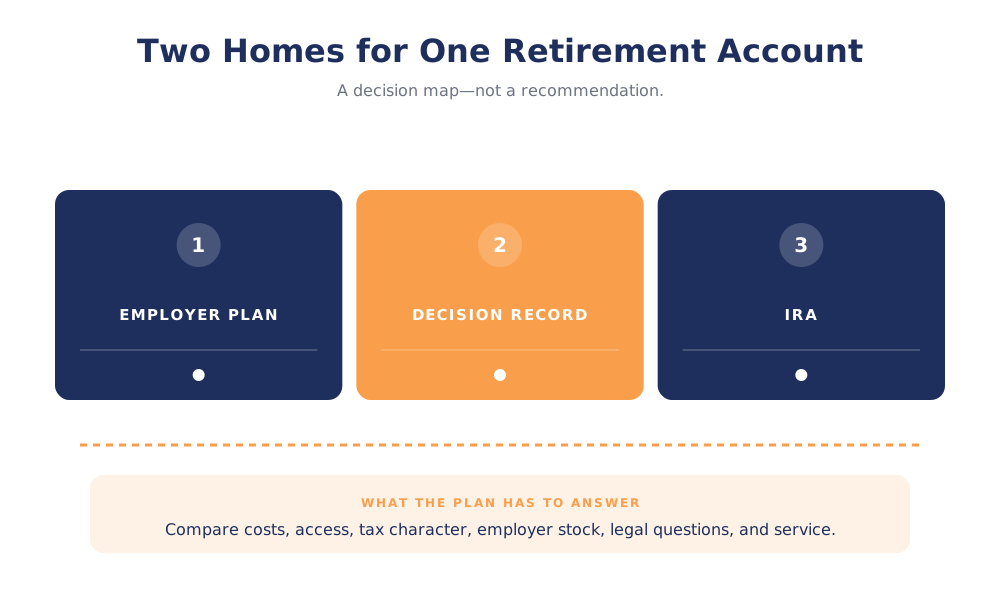
Create a two-column inventory: keep the plan versus roll to an IRA. Score neither column. Record costs, investments, access, tax characters, employer stock, legal questions, beneficiary administration, and service.
Then mark any item that must be resolved before money moves. Employer stock, after-tax contributions, plan loans, age-based withdrawal rules, and uncertain receiving-account instructions belong on that list.
Review the comparison with the plan administrator and qualified financial, tax, and legal professionals. If a rollover remains appropriate, use verified direct-transfer instructions and retain every confirmation and tax form.
Sources
- IRS rollover methods, direct-rollover treatment, 60-day rollover rule, and mandatory withholding on plan distributions paid to the participant — Internal Revenue Service, Rollovers of Retirement Plan and IRA Distributions
- 2026 standardized sample forms and proposed procedures for direct rollovers between plans and IRAs — Internal Revenue Service, Notice 2026-49 announcement
- Taxation and rollover treatment of qualified-plan distributions, including employer securities — Internal Revenue Service, Publication 575, Pension and Annuity Income
- RMD differences between IRAs and defined contribution plans — Internal Revenue Service, RMD Comparison Chart