The number on the 401(k) statement finally begins with a one and a five followed by six zeros. It feels substantial. But Orange County property costs are substantial too, health coverage may change, and no one has translated that account balance into the life it is supposed to fund.
The honest answer to “Is $1.5 million enough?” is not yes or no. It is another question: enough for what combination of spending, timing, taxes, housing, health coverage, and flexibility?
That is not a dodge. It is the difference between judging a retirement by one account and evaluating the household that depends on it.
Start with the job the money has to do
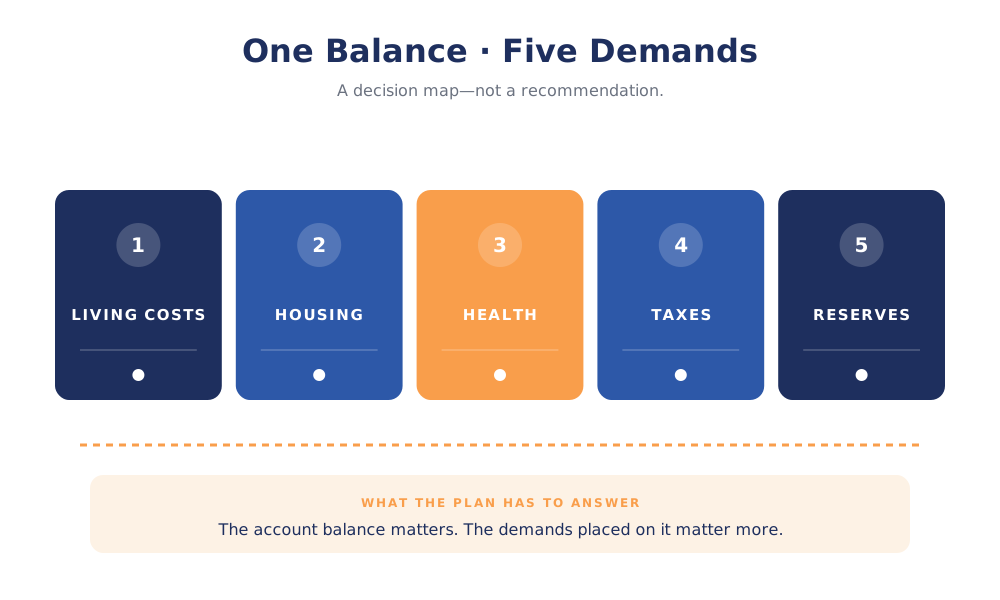
A 401(k) balance does not describe the retirement by itself. Build the spending assignment first:
- ordinary living costs that recur every month;
- housing costs, including taxes, insurance, maintenance, and association dues;
- health coverage before and after Medicare eligibility;
- travel, family support, charitable giving, or other priorities;
- large irregular expenses such as vehicles, repairs, or accessibility work; and
- a reserve for events that do not arrive on schedule.
Use actual statements and bank records where possible. A retirement budget built from memory often captures groceries and utilities while missing annual premiums, property work, taxes, gifts, and the expenses one spouse handles without the other seeing them.
Orange County’s aging-planning materials repeatedly identify housing costs, accessible housing, aging in place, and in-home support as meaningful local issues. That does not mean every Orange County retiree faces the same costs. It means a local retirement analysis should not import a national spending assumption and call the work finished.
Separate the 401(k) from the rest of the household
The account may be the largest financial asset without being the only resource. Place it beside:
- taxable savings and cash reserves;
- Roth accounts and after-tax plan money;
- Social Security and pension benefits;
- home equity and any mortgage;
- insurance and health-savings accounts;
- business, rental, or private-company interests; and
- future income from part-time or consulting work.
These resources do different jobs. Cash can cover a near-term roof replacement without forcing a retirement-plan distribution. Taxable assets may create gains rather than ordinary income. A traditional 401(k) distribution is generally taxable. Home equity may be valuable but inaccessible without a sale or financing transaction.
The purpose is not to label one account “good” and another “bad.” It is to see which source can meet which need, on what timeline, with what tax and liquidity consequences.
Model the bridge years explicitly
The years between the last paycheck and the later start of other benefits often carry the most planning choices.
If retirement begins before Medicare, identify the actual coverage path and premium assumptions. If Social Security begins later, show what funds the gap. If a pension has alternative start dates or forms, obtain the plan-specific estimates rather than approximating them.
Then place the dates on one line:
- last paycheck and bonus;
- employer health coverage ending;
- Medicare eligibility and enrollment windows;
- Social Security options for each spouse;
- pension or deferred-compensation dates; and
- required-distribution dates that may arrive later.
This timeline turns “retirement” from one event into a sequence. It also reveals years in which the household may have more control over taxable income—and years in which benefits or required distributions narrow that control.
Translate gross withdrawals into spendable cash
A traditional 401(k) withdrawal is not the same as the amount available for spending. Federal and California income taxes, withholding, estimated payments, and the interaction with other income all matter.
The IRS explains that retirement-plan distributions are generally subject to federal withholding and that insufficient withholding may require estimated payments. Social Security can also become partly taxable depending on other income. Medicare premiums can be income-related under separate rules.
So the working schedule should show three columns:
- gross distribution;
- estimated taxes and other income-related effects; and
- net cash available to the household.
Coordinate the tax assumptions with a CPA or qualified tax advisor. The point is not to forecast a precise lifetime tax bill. It is to avoid treating a pretax account balance as though every dollar were spendable.
Test bad timing, not only average timing
Retiring makes the portfolio a source of cash at the same moment that market declines can matter most. Our article “The First Five Years Decide the Next Twenty-Five” explains why early withdrawals during a decline can have a lasting effect even when long-run average returns later look ordinary.
A readiness test should therefore ask:
- What funds the next one to two years of planned spending?
- Which expenses could pause after a poor market year?
- Which large commitments are not flexible?
- Would a decline force the sale of assets at an uncomfortable time?
- Is there a written rebalancing and withdrawal process?
This is more useful than selecting one return assumption and extending it in a straight line. Forecasts are not facts, and retirement rarely follows an average path.
Decide what would cause the plan to change
A workable retirement plan is not one that never changes. It is one that identifies the changes in advance.
Write down the triggers that would prompt a review: a move, a major insurance change, sustained spending above the plan, support for family, a health event, a large property expense, or a market decline combined with continued withdrawals.
For each trigger, identify the first response to evaluate. That might be delaying a discretionary expense, using a reserve, adjusting withholding, revisiting a benefit date, or comparing housing choices. These are review prompts, not automatic prescriptions.
A seven-figure account balance can be reassuring. Retirement readiness comes from knowing what that balance must carry—and what can change when life does.
What to consider next
Build a one-page retirement assignment before debating products or percentages. Put the household’s annual spending, major irregular costs, income dates, account types, taxes, housing obligations, and reserve policy on the same page.
Then run more than one path: expected spending, a higher-cost period, and a poor early market sequence. Review the assumptions with the appropriate financial, tax, insurance, benefits, and legal professionals.
The useful conclusion is not “$1.5 million is enough.” It is a written answer to a more personal question: what would have to remain true for this retirement to work, and what would we do if one of those things changed?
Sources
- Orange County identifies housing costs, accessible housing, in-home care, and aging in place as significant older-adult issues — Orange County Office on Aging, FY 2025–2026 Area Plan Update
- Social Security retirement benefits depend on claiming age and household benefit eligibility — Social Security Administration, Plan for Retirement
- Medicare enrollment and coverage rules when retiring or losing employer coverage — Medicare.gov, Working Past 65
- Traditional retirement-plan distributions are generally taxable and may require withholding or estimated tax payments — Internal Revenue Service, Publication 575, Pension and Annuity Income