
The mortgage statement finally says zero. That should make staying in the house feel easy. Yet the roof is older, insurance keeps changing, the stairs feel different than they used to, and no one has decided what help at home might cost—or where the cash would come from.
A paid-off home can be a source of stability and meaning. It can also hide a retirement spending commitment that never appears as one neat monthly bill. The right question is not simply, “Can we stay?” It is, “What would staying require from our cash flow, our home, our support network, and one another?”
Paid off is not the same as cost free
Removing principal and interest is meaningful. The remaining housing budget still includes:
- property taxes and assessments;
- homeowners, earthquake, flood, or other applicable coverage;
- utilities, association dues, landscaping, and routine service;
- repairs and replacement of major systems;
- accessibility or usability modifications; and
- help with transportation, meals, cleaning, maintenance, or personal care.
These costs behave differently. Some recur predictably. Some arrive in large, irregular amounts. Others begin only after health, mobility, or caregiver circumstances change. A retirement plan that carries only the current recurring bills can make staying look easier than the full decision actually is.
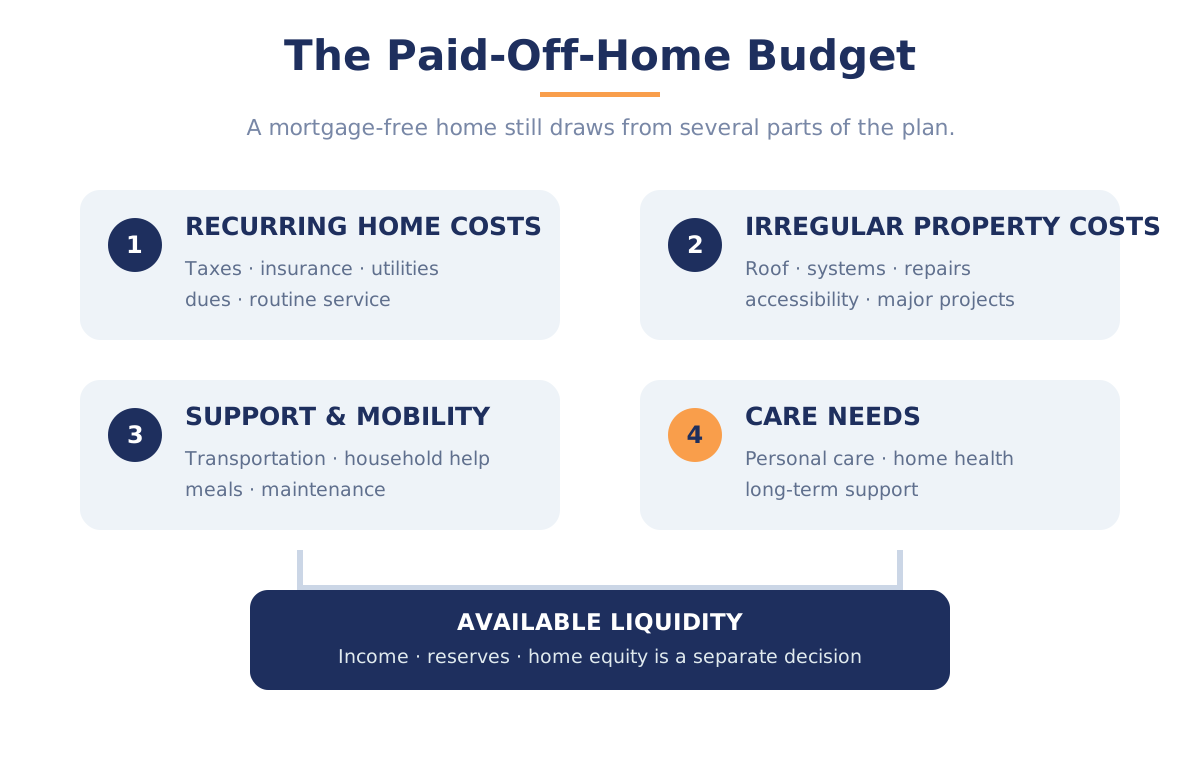
Build the budget in four layers
Start with today’s actual spending, then add separate planning layers.
Recurring home costs. Record taxes, insurance, utilities, association dues, landscaping, security, and regular maintenance. Use actual statements and renewal notices rather than broad rules of thumb.
Irregular property costs. Create a schedule for the roof, heating and cooling, plumbing, electrical work, exterior maintenance, appliances, and other major systems. The schedule is not a prediction; it is a way to prevent a foreseeable replacement from masquerading as an emergency.
Support and mobility costs. Consider transportation if driving changes, help with household tasks, meal support, technology assistance, and modifications that make the home easier to use. Orange County’s older-adult needs assessment identified transportation and in-home care among the services participants considered most important.
Care costs. Separate household convenience from personal care, home health, and long-term support. Medicare says it and most Medicare Supplement Insurance do not pay for long-term care. Coverage for limited home-health services follows separate requirements, so “we have Medicare” is not a complete care-funding plan.
Look at whether the home can do the job
Affordability is only one part of aging in place. The home itself has to support the life being planned.
Walk through the property with practical questions:
- Can daily living occur on one level if necessary?
- Are entries, bathrooms, lighting, flooring, and stairs adaptable?
- Who would manage maintenance if the current person could not?
- Can paid helpers park, enter, and work without avoidable obstacles?
- Are health care, groceries, family, and community reachable if driving changes?
- Would one spouse be able to operate the home alone?
The purpose is not to turn every possibility into a renovation. It is to identify which constraints can be addressed, which would be expensive or disruptive, and which could make another housing path more practical.
Orange County’s current Master Plan for Aging makes housing security—with a focus on supporting older adults who want to age in place—a priority. That local emphasis is useful context, but it does not answer the household-level question of whether a particular home, budget, and support system fit together.
Treat insurance as an operating requirement
Insurance is not just a line in the budget. It can affect whether the house remains financially workable after a loss. Review the policy, deductibles, exclusions, replacement-cost assumptions, and any required companion coverage with a qualified insurance professional.
The California Department of Insurance advises consumers to understand what a residential policy covers and to review coverage in light of rebuilding costs and policy terms. A premium change matters, but so can a higher deductible, a coverage limitation, or a replacement-cost assumption that no longer reflects the property.
Our related article, “Our Homeowners Insurance Changed Again. Does That Change Our Retirement Plan?”, treats that review as a balance-sheet and liquidity question rather than a product recommendation.
Home equity and available cash are not the same thing
A valuable home can strengthen a household balance sheet while leaving relatively little cash available for repairs, care, or everyday spending. Accessing equity generally requires a sale, financing, or another transaction. Each path can introduce costs, underwriting, interest, tax considerations, estate consequences, or market risk.
So model home equity in a separate column from liquid reserves. Ask:
- What costs can current income support?
- Which irregular expenses need dedicated liquid reserves?
- What change would trigger a move or an equity decision?
- Who has authority and capacity to act if the decision follows incapacity?
- What alternatives remain workable if financing or a sale takes longer than expected?
The goal is not to select a financing product in advance. It is to avoid discovering during a crisis that the plan depended on equity being instantly available.
Compare staying, modifying, and moving on the same page
“Stay or move” is often too blunt. A useful comparison includes at least three paths:
- Stay with the home largely as it is: ongoing property costs, maintenance responsibility, transportation, and support.
- Stay and modify: project cost and timing, disruption, remaining constraints, and expected years of usefulness.
- Move: transaction and moving costs, new housing expenses, property-tax questions, proximity to support, and the emotional cost of leaving.
For an eligible California homeowner, Proposition 19 may allow a transfer of a property’s taxable value to a replacement principal residence, subject to current qualification, timing, value, and filing rules. It is a planning input, not a reason by itself to move. Confirm the actual facts with the county assessor and tax advisor before relying on it.
Run all three paths through the same retirement assumptions. Include care and support under each path rather than pretending those costs exist only when someone stays home.
A home can be paid off and still ask a great deal of the retirement plan.
What to consider next
Begin with a home-and-cash-flow meeting, not a real-estate decision. Bring the property-tax bill, insurance declarations and renewal notices, utility and maintenance history, a list of major systems, and the retirement cash-flow plan. Add a candid description of who currently handles the house and what would happen if that person could not.
Then price only the decisions that matter next: a property assessment, an accessibility review, near-term maintenance, or a care-planning conversation. Coordinate financial, tax, legal, insurance, health-care, and property professionals where their roles apply.
The useful outcome is a written trigger plan: what would make staying harder, who would notice, what options would be evaluated, and where the first round of cash would come from. That keeps a deeply personal housing decision connected to the practical retirement plan beneath it.
Sources
- Orange County identifies housing security with a focus on aging in place as a priority initiative — Orange County Office on Aging, OC Cares Master Plan for Aging
- Orange County survey participants identified transportation and in-home care as important services for older adults — Orange County Office on Aging, Older Adults Needs Assessment Executive Summary
- Homeowners coverage, replacement-cost considerations, exclusions, deductibles, and policy review — California Department of Insurance, Home/Residential Insurance
- Medicare and most Medicare Supplement Insurance do not pay for long-term care — Medicare.gov, Long-term care coverage
- California Proposition 19 base-year-value transfer framework for eligible homeowners — California State Board of Equalization, Proposition 19