

The proposal looks polished. The income illustration is reassuring. But the question underneath it is still unresolved: what problem would this contract solve that the rest of the retirement plan does not?
“Are annuities worth it?” has no universal answer. A better answer comes from testing a specific contract against a specific household job.
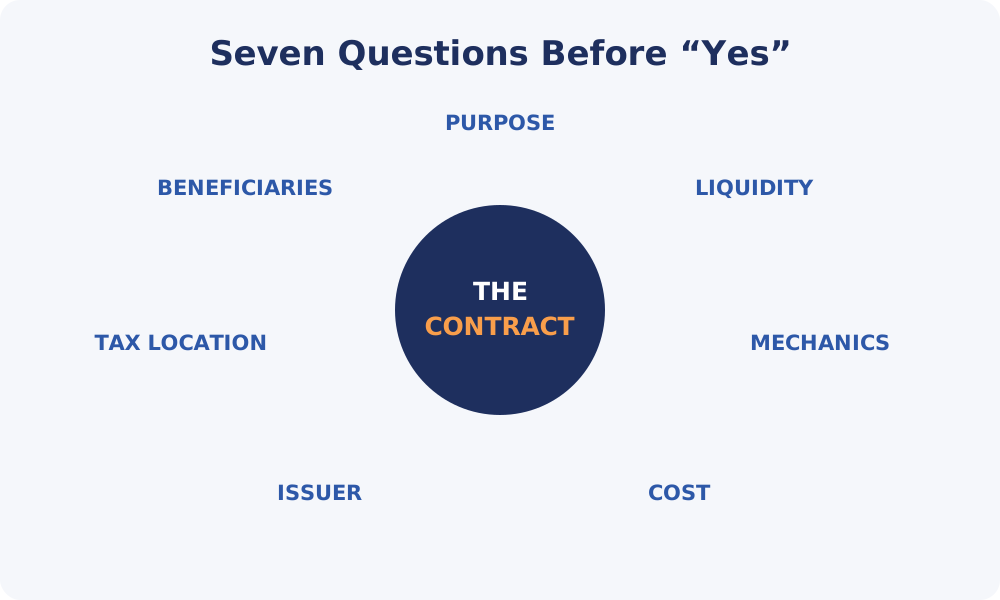
1. What job would the annuity have?
Name the job in one sentence: later income, current income, conservative accumulation, or a particular beneficiary feature. If the answer is merely “better returns” or “less worry,” the objective is not yet precise enough to evaluate.
2. How much liquidity remains outside it?
California’s Department of Insurance asks senior buyers whether they can afford to tie up money and still retain resources for emergencies, health care, and living expenses. That question is particularly practical for Orange County homeowners whose balance sheets may be property-rich but whose near-term cash needs remain real.
Map several years of known spending, property work, taxes, family commitments, and care contingencies before assigning money to a surrender period.
3. Can we explain the contract without the sales illustration?
Identify the issuing insurer, contract value, crediting method, income base, withdrawal rules, surrender schedule, death benefit, optional features, and reset rights. If any value cannot be withdrawn as cash, label it accordingly.
4. What does the contract cost?
Costs can appear as explicit annual charges, optional-feature charges, spreads, caps, participation limits, surrender charges, or an opportunity cost created by restricted access. Different contract types disclose costs differently, so compare economics rather than one fee line.
5. Which risks remain?
FINRA identifies issuer, liquidity, inflation, interest-rate, and—depending on the annuity—market risks. A contractual promise is an obligation of the insurer. Fixed payments may also lose purchasing power over time.
6. Does the tax location make sense?
Annuity earnings may receive tax deferral, but an annuity inside a tax-deferred retirement account does not create a second layer of tax deferral. Distribution and beneficiary taxation can differ from other assets. Coordinate with a tax professional using the actual account registration and cost basis.
7. What happens at death or incapacity?
Confirm beneficiaries, death-benefit mechanics, continuation choices, required forms, and who can act under a valid power of attorney. An estate plan and an annuity contract are separate systems; both need to point in the intended direction.
What to consider next
Ask for a one-page answer to all seven questions, then compare the proposed annuity with keeping the assets where they are and with other reasonable ways to address the same job. The comparison should use the same time horizon, liquidity needs, tax assumptions, and household goals.
Investor.gov advises buyers to understand optional benefits, costs, death-benefit terms, financial strength, and how the annuity fits the overall plan. California seniors also have specific free-look rights; verify the current rule and contract notice before purchase.
An annuity earns a place in the plan by doing a clearly defined job—not by having the most comforting illustration.
Sources
- Consumer questions on liquidity, emergency reserves, health needs, surrender terms, and California senior free-look rights — California Department of Insurance, Annuities: What Seniors Need to Know
- Annuity types, contract questions, optional benefits, costs, and insurer review — Investor.gov, Annuities
- Liquidity, issuer, inflation, interest-rate, fee, and surrender considerations — FINRA, Annuities