

A CD quote and a fixed-annuity quote land on the same desk. The rates are close. It is tempting to circle the larger number and call the comparison finished.
It is not finished. A CD and a fixed annuity are different legal and financial arrangements, and the differences become most visible when the household needs money, the term changes, or an owner dies.
CDs are FDIC insured to specific limits and offer a fixed rate of return if held to maturity, whereas investing in securities is subject to market risk including loss of principal. (120-LPL)
Begin with legal structure
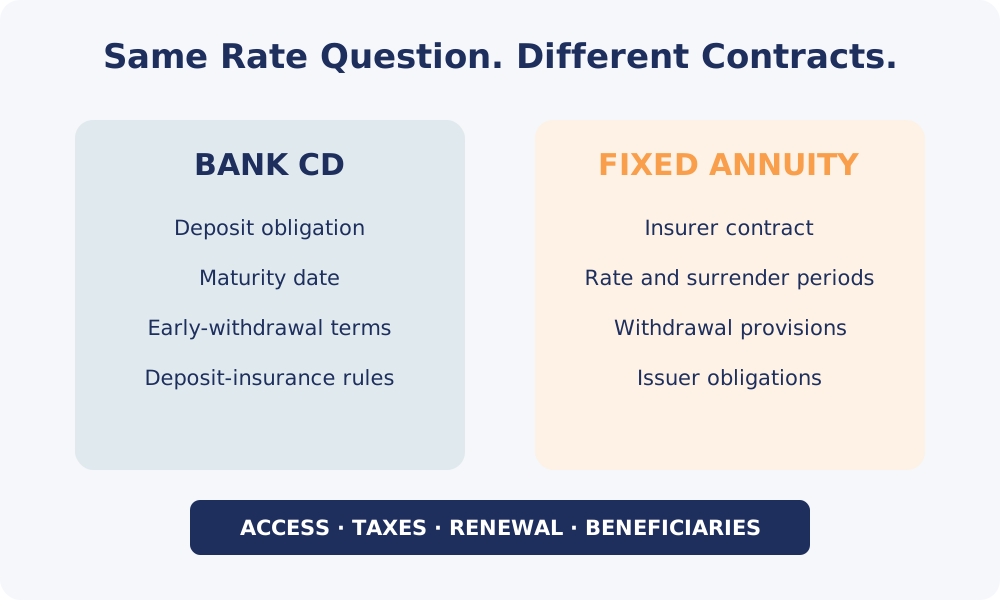
A CD is a deposit obligation of a bank or credit union. A fixed annuity is a contract obligation of an insurance company. The FDIC explains that annuities are not deposits and are not FDIC insured, even when sold at a bank. Eligible bank deposits may receive FDIC insurance within applicable rules and limits.
An annuity’s obligations depend on the issuing insurer. State insurance regulation and any applicable state guaranty-association framework are not the same as federal deposit insurance. Do not describe them as interchangeable.
Compare the rate term precisely
For the CD, record the annual percentage yield, maturity date, compounding method, renewal instruction, and early-withdrawal penalty. For the annuity, record the credited rate, how long it applies, the contractual minimum, renewal process, and surrender schedule.
An advertised rate may apply for a limited period. Ask what happens after that period and whether the household must act to avoid an automatic renewal or a changed rate.
Put access on the same page
A CD may permit early withdrawal subject to bank terms and a penalty. An annuity may allow some withdrawals while applying surrender charges or other contract provisions. Tax consequences may also apply.
The practical question is how much cash is accessible, by what date, at what cost, and through what process. For a retiree facing home repairs, taxes, care, or family support, that can matter more than a modest rate difference.
Compare taxes using the actual ownership
CD interest and annuity earnings generally follow different tax timing and distribution rules. An annuity held inside a retirement account also sits within that account’s tax framework. Avoid comparing tax labels without the account registration, basis, holding period, and expected withdrawal pattern.
Ask what happens next
At CD maturity, the deposit may renew, move, or become available under the bank’s instructions. At the end of an annuity rate period, the contract may continue under new terms, remain subject to surrender provisions, or offer other contractual choices.
Also compare beneficiary instructions and incapacity procedures. Ease of access for the owner does not automatically mean ease of administration for a spouse or agent.
What to consider next
Create a two-column worksheet using the actual documents, not advertisements. Include institution, legal structure, rate period, net crediting terms, accessible amount, early-exit consequences, renewal mechanics, tax treatment, beneficiary terms, and contact process.
Rate is one row in the comparison. Access, structure, and what happens next are the rest of it.
Sources
- CDs are deposit products; annuities are not FDIC-insured deposits — Federal Deposit Insurance Corporation, Deposit Insurance guidance
- Annuity issuer, liquidity, inflation, interest-rate, and surrender considerations — FINRA, Annuities
- California annuity contract, withdrawal, surrender, insurer, and senior free-look guidance — California Department of Insurance, Annuities: What Seniors Need to Know