

The funeral is over, family has gone home, and a practical worry moves to the front: Which income continues next month, which bills still need to be paid, and what am I supposed to do first?
The first year after a spouse dies can bring several financial transitions at once. Social Security may change. Account access may depend on ownership or legal authority. Insurance claims and estate administration can follow different timelines. The final joint tax year may not resemble the next one.
The goal is not to redesign the rest of your life in the first few weeks. It is to create enough order and liquidity to make the next sound decision.
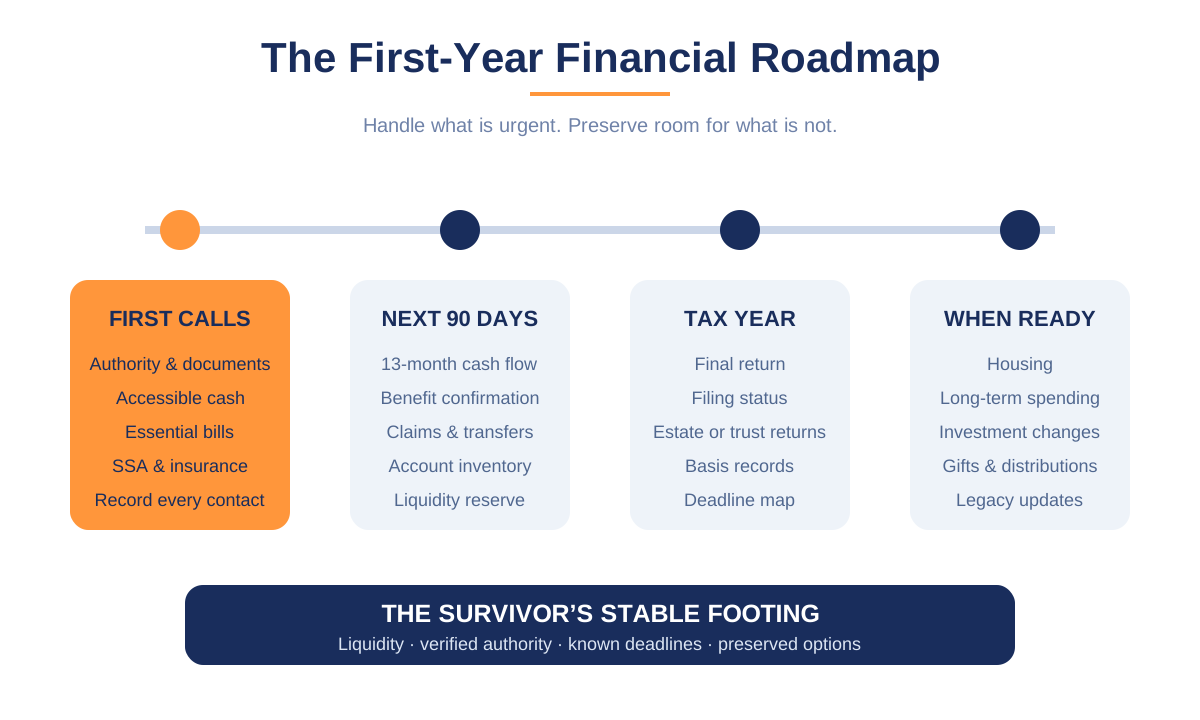
Begin with a two-list system
Create one list titled Handle now and another titled Decide later.
The first list may include:
- ordering death certificates and locating the will, trust, and beneficiary records;
- identifying the trustee, executor, or other person legally authorized to act;
- confirming access to the household’s operating cash and essential bill payments;
- contacting Social Security and the relevant pension or benefits offices;
- notifying life insurance carriers and the financial institutions that require notice;
- safeguarding the home, vehicles, digital accounts, mail, and personal information; and
- recording every call, claim number, document sent, and promised follow-up.
The second list may include selling the home, making large gifts, changing the investment strategy, paying off debt early, distributing inherited assets, or making other choices that are difficult to reverse.
Some later decisions may have genuine deadlines. The point is not to postpone everything; it is to distinguish a verified deadline from pressure to “get everything settled.”
Confirm Social Security rather than estimating from the bank statement
Social Security survivor benefits are based on eligibility and the deceased person’s work record. A surviving spouse may qualify, but the amount and claiming choices depend on age, work history, existing benefits, and other circumstances.
The Social Security Administration says a funeral home will usually report a death. That reporting step is not the same as completing an individualized survivor-benefit review. Contact Social Security promptly to confirm:
- whether an application is required;
- which benefit is currently being paid and whether it will change;
- the effect of the survivor’s age and earnings;
- whether another retirement or survivor claiming sequence is available; and
- whether any payment received after death must be returned.
Do not build the household budget on the assumption that both spouses’ full monthly checks will continue. Use the amount and effective date confirmed by Social Security.
Build a thirteen-month cash-flow view
A monthly budget often misses the expenses that arrive only once or twice a year. Map the next thirteen months so the same calendar month appears twice and annual obligations become visible.
Start with incoming cash:
- Social Security after the benefit review;
- pension or survivor pension payments;
- wages or business income;
- required or planned retirement-account distributions;
- insurance proceeds or other claims, listed separately until received; and
- cash already available in accounts the survivor can legally access.
Then map essential outflows:
- mortgage, property tax, homeowners insurance, and maintenance;
- health insurance, Medicare premiums, and medical costs;
- utilities, food, transportation, and caregiving;
- debt payments and recurring subscriptions;
- estimated and annual taxes; and
- legal, tax, funeral, estate, and property-administration costs.
This is not a permanent retirement budget. It is a transition forecast. Its job is to show when accessible cash could become tight before a long-term decision is forced.
Separate ownership, beneficiary status, and authority
These roles are easy to blur during a stressful period:
- Owner: the person or entity that legally owns an asset.
- Beneficiary: the person designated to receive an asset or benefit after death, subject to the governing terms.
- Trustee: the person authorized to administer trust property under the trust document and applicable law.
- Executor or personal representative: the person named or appointed to administer estate property through the applicable process.
Being the surviving spouse does not make every account immediately available or authorize every estate action. California Courts recommends first identifying what the person owned and owed, who is authorized to handle the matter, and which transfer process applies. Property may pass through beneficiary designation, joint ownership, a trust, a simplified transfer procedure, or formal probate depending on the facts.
Ask each institution what document it requires. Keep estate or trust money separate from personal spending when counsel or the governing arrangement requires it.
Preserve records before reorganizing accounts
Before closing, retitling, consolidating, or discarding anything, preserve the information needed to explain what happened during the year.
Retain:
- date-of-death account statements and recent tax returns;
- year-to-date income, cost-basis, and withholding records;
- retirement, pension, and Social Security correspondence;
- property deeds, loan documents, appraisals, and insurance policies;
- trust, will, power-of-attorney, and beneficiary documents;
- business ownership and compensation records; and
- invoices and receipts connected with the final illness, funeral, property, trust, or estate.
A power of attorney generally ends at death. Post-death authority comes from the applicable ownership, beneficiary, trust, or estate framework. Confirm that authority with qualified counsel and the institution rather than reusing credentials or relying on prior access.
Put the tax year on the calendar
The IRS explains that the surviving spouse or personal representative generally handles the deceased person’s final federal income tax return. A surviving spouse may be eligible to file jointly for the year of death if the requirements are met. Filing status in later years depends on the survivor’s circumstances; the “qualifying surviving spouse” status has specific requirements and should not be assumed from the label alone.
Schedule an early meeting with the CPA or tax professional to identify:
- the final individual return and any extension or payment dates;
- estate or trust returns that may be required;
- income and deductions received before and after death;
- estimated-tax and withholding changes;
- account titling and tax-identification questions;
- basis and valuation records that should be preserved; and
- retirement-account beneficiary rules and deadlines.
The objective is a shared deadline map, not a rushed tax strategy.
Create a temporary decision policy
Grief, paperwork, and unsolicited advice can arrive together. A simple temporary policy can safeguard the survivor’s attention and assets:
- no financial decision on an unexpected incoming call;
- no transfer until the institution and recipient are independently verified;
- no large gift, investment, home sale, or debt payoff without a second review;
- no assumption that a document is routine because it is time-sensitive; and
- no sharing credentials when a lawful access process is available.
Give trusted professionals permission to slow the process down. Urgency should be supported by a real deadline, a cash-flow need, or a legal obligation.
Hold a first-year coordination meeting
Bring the cash-flow map, account inventory, legal documents, benefit letters, tax returns, insurance information, and open questions. The right participants may include an estate attorney, CPA or tax advisor, financial advisor, insurance professional, and benefits specialist.
Use the meeting to answer four questions:
- What must happen in the next thirty days?
- What has a deadline during the next tax year?
- What amount of cash must remain accessible while claims and transfers are pending?
- Which decisions can be deferred until the survivor has more information and capacity?
What to consider next
If you are facing this transition now, begin with one page: anticipated incoming cash, essential bills, accessible accounts, the people with legal authority, and the next three calls. Then add deadlines as they are verified.
The first-year plan does not need to solve the rest of retirement. It should preserve the survivor’s footing, preserve options, and create enough clarity for thoughtful decisions later.
Sources
- Social Security Administration — Survivor benefits
- Social Security Administration — What you could get from Survivor benefits
- Internal Revenue Service — Publication 559, Survivors, Executors, and Administrators
- California Courts — Guide to property after someone dies
Sources
- Eligibility, application, payment, and reporting framework for Social Security survivor benefits — Social Security Administration, Survivor benefits
- How survivor-benefit amounts and claiming age may affect payments — Social Security Administration, What you could get from Survivor benefits
- Federal return responsibilities and filing-status considerations after a death — Internal Revenue Service, Publication 559 (2025), Survivors, Executors, and Administrators
- General California framework for property, debts, estate administration, and identifying the person authorized to act — California Courts Self-Help Guide, Property after someone dies