
The equity portal used to feel theoretical. Then the company value changed, a liquidity window appeared, or a transaction moved close enough to matter. The number on the screen became large enough to affect the household plan—and complicated enough that acting on it no longer felt like a routine benefits decision.
The first step is not deciding whether to sell. It is confirming exactly what you own and placing the governing documents, dates, valuation, tax questions, and liquidity terms on one page.
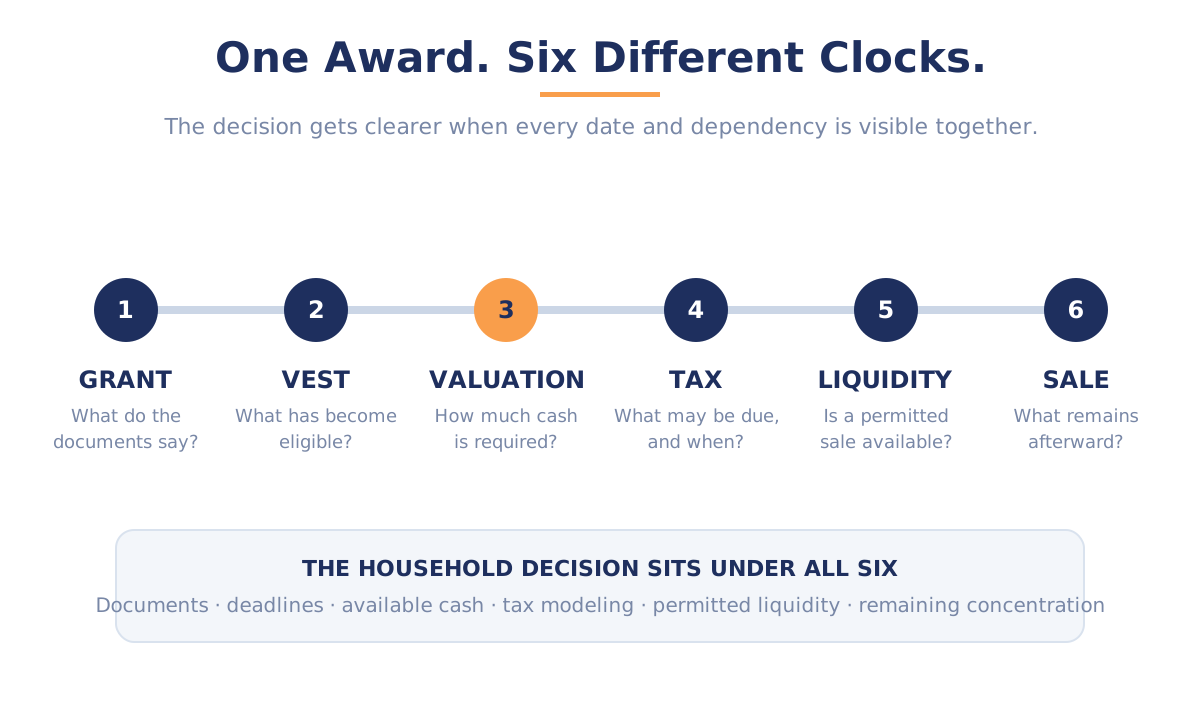
Private-company equity is not one asset with one rule. Restricted shares, vested shares, and other forms of equity-based compensation may have different ownership conditions, tax treatment, and transfer restrictions. Even within one award, vesting, valuation, tax, liquidity, and sale events may occur years apart. The planning begins when those clocks are made visible together.
Start with the documents, not the dashboard value
Collect the award agreement, equity plan, vesting schedule, ownership records, and any current transaction or liquidity-window materials. Confirm the legal name of the issuing company and whether a subsidiary or parent appears in the documents. Ask the plan administrator to resolve any differences between the portal and the governing records in writing.
Create an inventory that records:
- the type and number of shares, units, or other ownership interests;
- the amount vested and unvested;
- the acquisition dates and any available cost-basis records;
- what value the portal displays and how that value is determined;
- transfer, repurchase, and sale restrictions;
- employment or service conditions that may affect ownership; and
- whether a current liquidity program applies.
Those facts are the inputs. A decision made from the displayed value alone may overlook a transfer restriction, a repurchase right, an uncertain tax basis, or a deadline in the award agreement.
A private-company valuation is not the same as available cash
A portal value may come from an appraisal, a recent financing, an internal calculation, or another company process. The figure may be useful for administration without representing the price a holder could receive today. A private security may have no current market, and a company may restrict who can buy it or whether it can be transferred at all.
Write down what the displayed value is intended to measure. Then separate three questions:
- What value appears in the company records?
- What transaction, if any, permits a sale?
- What amount might reach the household after taxes, withholding, fees, and timing constraints?
The answers may be materially different. Treating them as one number can turn an uncertain asset into assumed spending power before the household has received cash.
Vesting and ownership status belong on the same timeline
Vesting describes a condition in the governing arrangement; it does not necessarily settle every ownership, transfer, valuation, or tax question. Confirm what happens if employment ends, whether the company has a repurchase right, and which records establish the holder’s status on the date of a proposed transaction.
IRS Publication 525 discusses federal tax treatment for restricted property, including the relationship between transferability, substantial risk of forfeiture, compensation income, and basis. The governing facts determine the result. A CPA should review the actual award documents, vesting history, payroll records, and transaction terms rather than relying on the portal label.
California adds another layer. FTB Publication 1004 addresses equity-based compensation sourcing and changes in residency. Moving after an award is issued does not by itself settle which state may tax the compensation element. Service periods, vesting, residency history, and transaction timing may still matter.
Read a liquidity window as a transaction
A company-sponsored tender offer or other liquidity window may be the first time an employee or former employee can sell some shares. It may also include eligibility rules, share limits, proration, representations, tax withholding, release language, and a deadline.
Read the actual offer and award materials. Confirm:
- which holders and securities are eligible;
- the maximum amount the holder may tender;
- whether the company may accept fewer shares than requested;
- how the sale price is established;
- what taxes, fees, or other amounts may be withheld;
- when proceeds are expected;
- which representations or releases accompany participation; and
- what equity and restrictions remain after the transaction.
The offer documents govern the transaction. A summary in an email, an internal presentation, or a conversation with a colleague may omit a term that matters to the household decision.
The tax estimate and the planning estimate answer different questions
The tax professional estimates how the contemplated sale or other transaction may be reported. The financial plan asks what the decision does to the rest of the household.
That wider review includes emergency liquidity, near-term purchases, debt, college or family support, retirement contributions, other employer exposure, and the amount already tied to the same company.
If a sale is available, the decision is not automatically “sell all” or “hold all.” The documents may limit the choice, and the household may have several objectives competing for the proceeds. Map the uses before the transaction closes: taxes and reserves first, then known obligations and longer-term investment decisions.
Our article on concentrated positions explains why a holding can become both a source of wealth and a constraint on other decisions. The private-company version adds another complication: diversification may not be available on demand.
A do-it-yourself history is useful—until the decisions stop being separate
Engineers and technical professionals often bring exactly the right instinct to this problem: get the inputs, understand the rules, and test the assumptions. The difficulty is not a lack of ability. It is that the award agreement, company transaction, federal tax, California tax, cash-flow plan, and investment decision belong to different systems.
A useful professional review should make those systems easier to inspect. It should identify which facts come from the company documents, which calculations belong to the CPA, which contractual questions belong to counsel, and which tradeoffs belong to the household.
Before acting, create one decision sheet containing:
- the equity inventory and controlling documents;
- every vesting, election, transaction, and sale deadline;
- the source and date of each valuation figure;
- tax, withholding, and basis estimates from the CPA;
- permitted liquidity under the actual transaction terms;
- the position and restrictions remaining afterward; and
- the household uses competing for the same cash.
That sheet does not choose the answer. It makes the answer explainable.
The equity value may be one number on a portal. The planning is the sequence of documents, taxes, cash, and decisions behind it.
What to consider next
Begin with the award and transaction documents. Ask the plan administrator to confirm the ownership record, vesting status, valuation basis, transfer restrictions, and eligibility questions. Give the CPA enough lead time to review federal and California tax treatment, withholding, basis, and sourcing before a transaction deadline.
Then place the contemplated action into the household plan. Decide which proceeds must remain liquid, which obligations have priority, and what concentration would remain afterward. If contractual, estate, or transfer questions are present, bring in qualified counsel before signing.
The objective is not to predict the company. It is to understand the decision the documents actually permit and the financial obligations that decision may create.
Sources
- Federal tax rules for restricted property, vesting, compensation income, basis, and later sales — Internal Revenue Service, Publication 525 (2025), Taxable and Nontaxable Income
- California treatment of equity-based compensation and income sourcing when residency changes — California Franchise Tax Board, Publication 1004, Equity-Based Compensation Guidelines
- SEC tender-offer guidance emphasizes the governing offer materials, eligibility, pricing, timing, and financial information relevant to a holder's decision — U.S. Securities and Exchange Commission, Tender Offer Rules and Schedules