The rental has appreciated far beyond what you paid. Selling could create a meaningful tax bill. Keeping it means another round of tenants, repairs, insurance decisions, and management. The real question is no longer whether the property has been successful. It is whether the property still fits the household’s next chapter.
The embedded gain matters, but it should not be allowed to make every other choice disappear. Before comparing keep and sell, ask a more basic question: what job is this property supposed to do for the household now?
Start with the property’s current job
A rental acquired years ago may have entered the household plan almost by accident. It may have been a former residence, an early investment, or a property kept because selling felt expensive. Appreciation can make the holding look successful even when its current role has never been defined.
Write down what the property contributes today:
- net cash flow after routine expenses and realistic reserves;
- diversification or concentration relative to the rest of the balance sheet;
- inflation-sensitive income or long-term appreciation potential;
- housing for a family member or another nonfinancial objective;
- collateral or borrowing capacity;
- management work, decision load, and tenant responsibility; and
- a possible future estate, family, or charitable objective.
Then identify what the household needs from it over the next several years. A property can be valuable and still be poorly matched to a retirement plan that needs more liquidity, less administration, or a different income pattern.
Reconstruct the records before discussing the gain
The purchase price is not the same as adjusted basis. IRS Publication 527 describes basis, depreciation, improvements, and rental records. Publication 544 addresses gain or loss when property is sold.
Gather:
- the original closing statement and purchase records;
- depreciation schedules from every year of rental use;
- invoices and permits for capital improvements;
- records of any period of personal use or conversion from a residence;
- casualty-loss and insurance documentation;
- refinancing and debt records; and
- a current estimate of selling costs.
Depreciation allowed or allowable can affect basis even if a deduction was missed. A prior residence converted to rental use can introduce additional basis questions. Do not estimate the sale tax from a real-estate portal’s gain number or from purchase price alone; have the CPA reconstruct the history.
Measure cash flow as an owner, not as a listing
Gross rent does not describe the property’s contribution to retirement. Build a forward-looking property statement that includes:
- vacancy and leasing costs;
- property management, even if the owners currently do the work themselves;
- property tax, insurance, association dues, and utilities paid by the owner;
- routine maintenance and a reserve for roofs, systems, and other capital needs;
- debt service and expected refinancing terms;
- legal, accounting, and administrative costs; and
- the owner time required to make the property function.
This does not need to punish the property with artificial expenses. It needs to make the economic role comparable with other uses of the equity.
An appreciated property with modest current cash flow may still be worth keeping. But that should be a deliberate conclusion based on its future role—not a default produced by fear of the tax bill.
Put the next capital cycle on the retirement calendar
Rental income and capital spending do not arrive on the same schedule. A property may produce positive monthly cash flow while approaching a roof, plumbing, electrical, structural, or interior project that will require a large outlay and owner attention.
Create a property-capital calendar for the next several years. Include the expected timing and a reasonable cost range for major systems, insurance deductibles, tenant turnover, accessibility work, and any association assessment the owner may face. Separate normal maintenance from projects that could compete with retirement reserves or planned distributions.
The question is not whether every projected repair will occur. It is whether the household has enough liquidity and willingness to carry the property when several demands arrive together.
A sale buys liquidity and ends the property responsibility
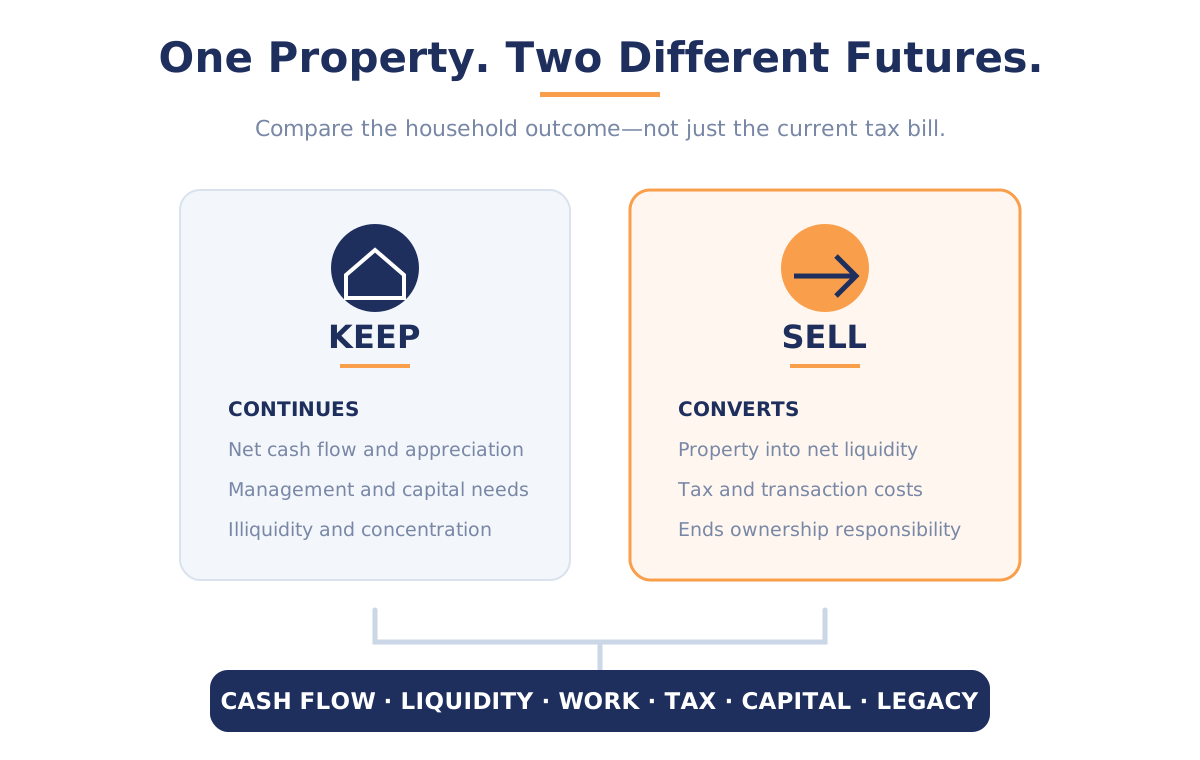
A sale converts the property into cash after debt, transaction costs, and taxes. That can create liquidity for retirement spending, reserves, family goals, or a more diversified investment mix. It also ends responsibility for the tenant, building, financing, and future capital projects.
The tradeoff is that a sale may recognize gain. Rental-property dispositions can involve more than one category of tax treatment, including amounts connected with depreciation. California consequences and estimated payments also need to be modeled for the actual owner and year.
Ask the CPA to estimate:
- adjusted basis and the expected amount realized;
- federal character of the gain, including depreciation-related treatment;
- California tax and any required withholding or estimated payments;
- debt payoff and transaction costs; and
- net cash available to the household after the transaction.
The planning model begins with the last number. Gross sale price is not spendable proceeds.
Compare keep and sell on the same page
Use one scorecard rather than two separate conversations.
Keep: What net cash flow, work, capital needs, risk, and liquidity does the present property contribute over the next several years? What happens if rent falls, insurance rises, or a major project arrives during a difficult market or health event?
Sell: What cash remains after debt, transaction costs, and modeled taxes? Which retirement, reserve, family, or legacy priorities would that liquidity serve, and how would the household make decisions about the proceeds afterward?
The comparison also includes estate planning. Ownership, title, community-property considerations, trust provisions, incapacity planning, and anticipated transfers can affect the analysis. Those are attorney and tax-advisor questions; they should be surfaced before a transaction, not reconstructed afterward.
Our article on concentrated positions explains why an asset can be both a source of wealth and a constraint on other choices. A rental property adds illiquidity, operating responsibility, and location-specific risk to that balance-sheet question.
The tax estimate matters. The planning question is what the property—or the net sale proceeds— needs to do for the household next.
What to consider next
Begin with the documents and a realistic property statement. Ask the CPA to reconstruct basis and model a taxable sale. Ask the real-estate and insurance professionals for current market, transaction-cost, coverage, and property-condition information. Bring legal or estate questions to qualified counsel before changing ownership or signing a sale agreement.
Then compare keep and sell in the retirement plan. Look at liquidity, income, reserves, management responsibility, capital needs, concentration, financing, insurance, and estate objectives alongside the modeled tax consequences.
The objective is not to identify one universally superior path. It is to choose a property decision whose financial and practical consequences the household is prepared to carry.
Sources
- Adjusted basis, depreciation, rental expenses, improvements, and records for residential rental property — Internal Revenue Service, Publication 527 (2025), Residential Rental Property
- Gain or loss, adjusted basis, business-property dispositions, depreciation treatment, and sale reporting — Internal Revenue Service, Publication 544 (2025), Sales and Other Dispositions of Assets