

The buyer’s headline number looks large enough to retire. Then the draft terms arrive: some cash at close, a seller note, an earnout, money held in escrow, and perhaps a continuing ownership interest. Suddenly, “What is the business worth?” is no longer the household’s most important question.
The retirement question is: what arrives, when is it available, what remains at risk, what is owed, and which part of the future plan depends on someone else performing?
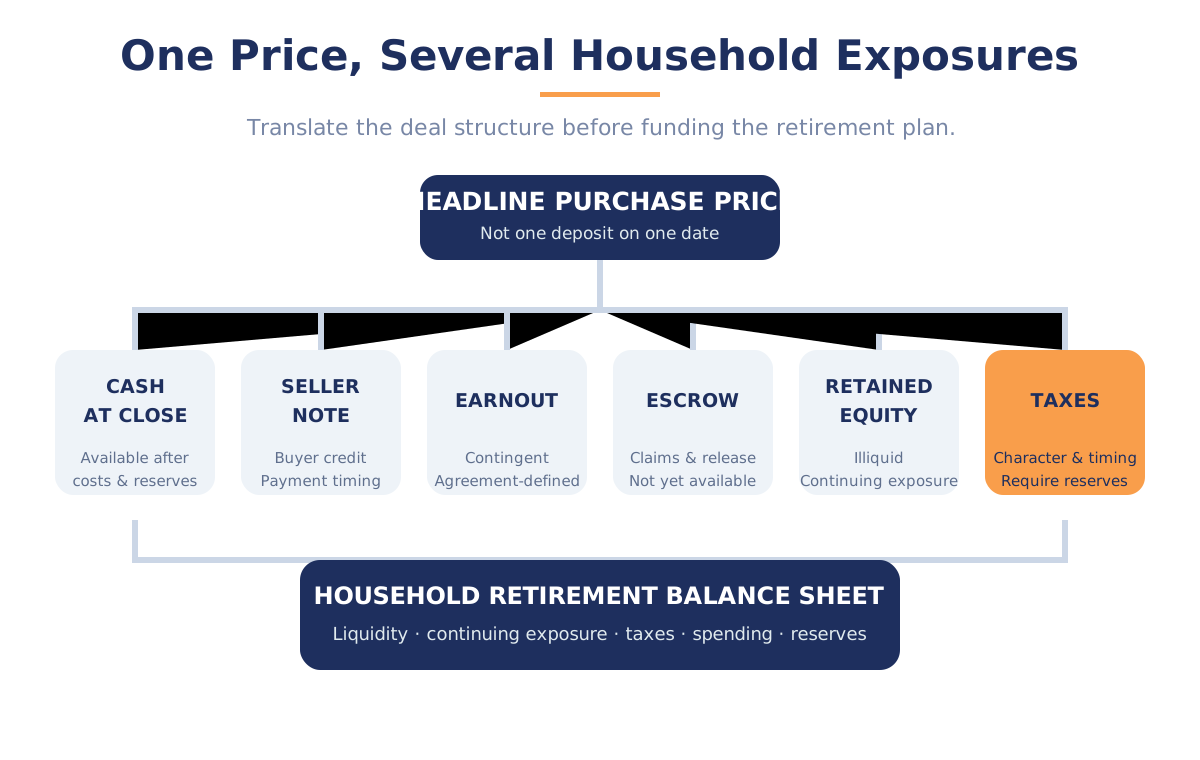
Separate enterprise value from household liquidity
The headline purchase price can be economically meaningful without being immediately spendable. Build a consideration schedule that lists every form of value:
- cash delivered at closing;
- debt paid or assumed;
- seller note principal and interest;
- earnout or other contingent payments;
- escrow or holdback;
- rollover or retained equity;
- transaction expenses; and
- estimated taxes and required reserves.
For each item, record the payment date, conditions, obligor, security or priority, transfer restrictions, tax treatment still under review, and the document that controls.
Only then can the retirement plan distinguish liquid proceeds from continuing exposures.
Map the payment date, not just the amount
IRS Publication 537 generally defines an installment sale as one in which at least one payment is received after the tax year of sale. That does not mean every delayed payment receives identical installment treatment. Inventory, depreciation recapture, interest, asset character, related-party rules, contingent payments, and other provisions can change the reporting.
The household plan needs a calendar that shows:
- closing and initial cash;
- transaction costs and immediate liabilities;
- estimated-tax and filing dates;
- seller-note payment dates;
- earnout measurement and payment periods;
- escrow release dates and claim windows; and
- any restriction or liquidity date for retained equity.
A retirement spending plan that assumes all proceeds on the closing date can be structurally wrong even if the total deal value is accurate.
Treat a seller note as a continuing exposure
A buyer’s note is not the same as cash. It depends on the buyer’s ability and obligation to pay under the agreement. It may also carry interest, collateral, subordination, covenants, offsets, or collection procedures.
Ask deal counsel and the financial team to identify:
- who legally owes the payment;
- what supports or secures the obligation;
- whether senior lenders have priority;
- what can trigger offset, acceleration, or default;
- whether the note can be transferred; and
- how the household plan behaves if payments are interrupted.
The purpose is not to predict a default. It is to avoid spending against a receivable as though it were already cash.
Model an earnout as contingent, not expected cash
An earnout can bridge a disagreement about value, but it also leaves part of the owner’s proceeds dependent on post-close definitions, operating results, buyer decisions, and enforcement terms.
The retirement plan should show received proceeds and contingent proceeds separately. Test the household plan without the earnout, with delayed payment, and with the contractual amount under the deal team’s assumptions. That is scenario planning, not a forecast of the buyer or business.
The agreement—not the slide deck—defines the metric, accounting method, control rights, reporting access, dispute process, and payment timing. Those questions belong with transaction counsel and the CPA before the owner relies on the earnout in the personal plan.
Understand what escrow is—and what it is not
Escrow or holdback may be set aside for indemnification claims, purchase-price adjustments, working-capital true-ups, or other obligations. The owner may expect the funds to return later, but the amount and timing can remain subject to the agreement.
List the escrow purpose, release schedule, claim process, investment or interest treatment, and tax questions. Do not use the gross escrow amount to fund a near-term spending commitment until its availability is clear.
Purchase-price allocation reaches the personal plan
A business sale is often a sale of several assets, not one undifferentiated item. IRS Publications 537 and 544 discuss allocation, basis, depreciation recapture, gain character, inventory, and other asset-specific rules. Form 8594 generally reports the allocation in an applicable asset acquisition.
The buyer and seller may view an allocation differently because the tax consequences differ. That is a transaction and tax negotiation, not a financial-planning election made after closing.
Ask the CPA and deal counsel to translate the proposed allocation into:
- estimated tax character and timing;
- cash needed for federal and state payments;
- amounts that may not qualify for installment treatment;
- reporting forms and records; and
- the after-tax proceeds available for household planning.
Retained equity can recreate the concentration
Rollover or retained equity may maintain participation in a future enterprise. It can also leave the seller exposed to the same industry, management team, buyer, leverage, or liquidity constraints after the transaction.
Do not count retained equity as liquid retirement capital. Record its governing documents, valuation basis, dilution provisions, transfer restrictions, information rights, distribution policy, and possible liquidity paths. Then place it beside the seller note and earnout when evaluating how much continuing deal exposure remains.
Our article on concentrated-position planning explains why economic value and usable diversification are different questions.
Build the household uses-of-proceeds schedule
Once the consideration and tax schedules exist, map the household side:
- transaction taxes and professional fees;
- debt or contingent obligations to resolve;
- near-term spending and major commitments;
- emergency and tax reserves;
- retirement-income funding;
- estate and charitable intentions; and
- amounts that can remain invested for longer-term goals.
Compare these uses with cash actually available—not the headline price. If the near-term plan requires contingent or restricted proceeds, the structure deserves another look with the deal team.
This is the bridge from exit planning to retirement planning. Our earlier article, “The Exit Is Won Before the Sale”, focuses on readiness before a buyer arrives. This article begins when the offer must be translated into the owner’s next balance sheet.
One price can create several household exposures. Retirement planning starts by naming each one.
What to consider next
Before signing binding economics, ask the transaction attorney, CPA, valuation and deal professionals, and financial advisor to review one shared consideration schedule. Reconcile the agreement, tax model, closing statement, and household plan.
Run the retirement plan first on cash at close after costs, taxes, liabilities, and reserves. Add the note, earnout, escrow, or retained equity only according to its actual timing and conditions. Record which household decisions depend on each payment.
The goal is not to elevate one tax feature or demand all cash. It is to understand the tradeoffs while the deal can still be evaluated—and to keep the retirement plan from assuming liquidity the household does not yet have.
Sources
- Installment-sale definition, payment components, buyer obligations, contingent payments, escrow, and sale-of-business rules — Internal Revenue Service, Publication 537 (2025), Installment Sales
- Basis, character, depreciation recapture, and reporting considerations for sales of business assets — Internal Revenue Service, Publication 544 (2025), Sales and Other Dispositions of Assets
- Buyer and seller reporting of the allocation of consideration in an applicable asset acquisition — Internal Revenue Service, Form 8594 and instructions
- Installment-sale reporting — Internal Revenue Service, Form 6252 and instructions