

The trust binder is on the table. Family members are asking what happens next. Bills still need to be paid, accounts may be restricted, and someone has already asked when the inheritance will arrive. You are named as successor trustee—but the document does not feel like an operating manual.
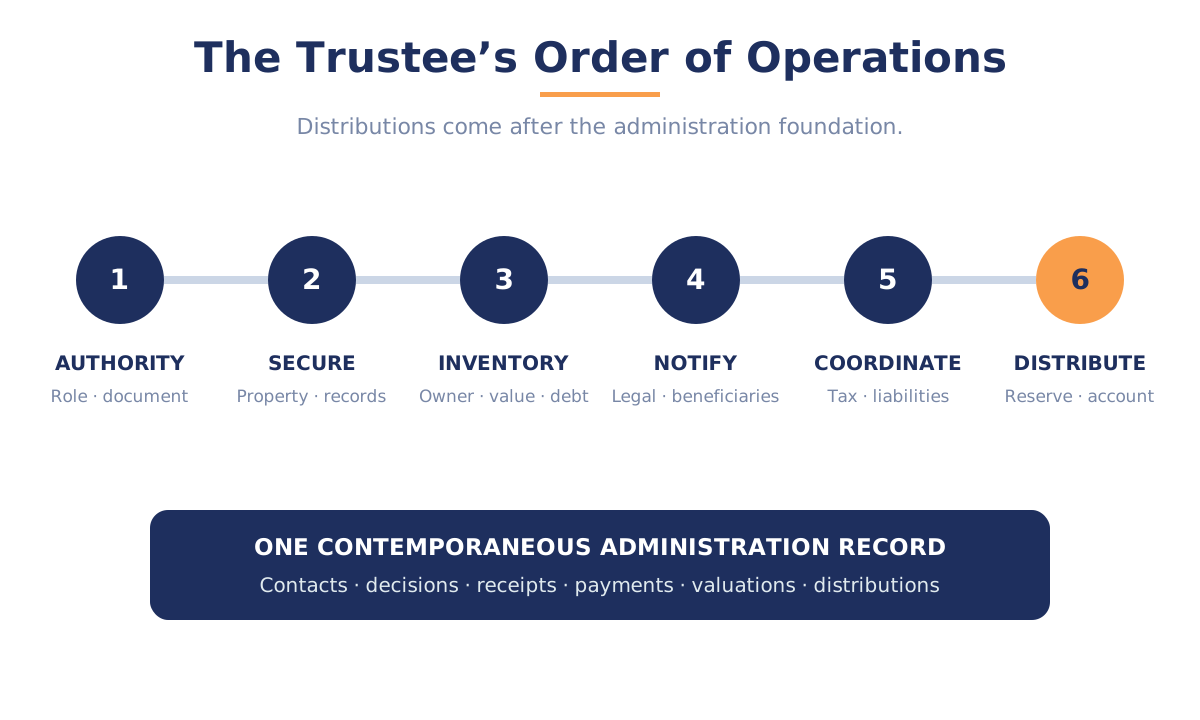
The first job is not distributing property. It is establishing authority, taking control of what the trust governs, and creating a contemporaneous record of every decision.
Confirm which role you are serving
A successor trustee and an executor are not interchangeable. The trustee administers property governed by the trust. An executor or personal representative handles assets in the probate estate under the will and court process. A surviving spouse may also own assets directly or receive them by beneficiary designation.
One person can wear more than one hat, but each action needs the correct authority. Before contacting institutions, ask the attorney to confirm:
- which event activated the successor trustee;
- whether acceptance documents or a certification of trust are needed;
- which trust and amendments control;
- whether any co-trustee must act;
- which assets are actually titled to the trust; and
- whether a separate probate estate may be required.
Establish control first; reorganize later
The early goal is continuity, not portfolio redesign. Arrange ongoing oversight of physical property, maintain insurance, monitor bills, retain digital and paper records, and identify urgent business or real-estate decisions. Avoid commingling trust property with personal funds.
Build a contact and control log for every institution. Record who was contacted, what authority was requested, documents delivered, restrictions placed on the account, and the next action date.
Do not assume every asset should be sold or retitled immediately. Retirement accounts, transfer-on-death accounts, jointly owned property, business interests, and insurance may pass under rules outside the trust.
Build one inventory with ownership and tax fields
List each asset and liability on one working schedule:
- legal owner and governing document;
- institution, account, property, or policy identifier;
- date-of-death value and valuation source;
- income received after death;
- debt, lien, expense, or insurance requirement;
- beneficiary designation, if any;
- liquidity and transfer restrictions; and
- attorney, CPA, or appraisal question still open.
This schedule helps separate trust property from probate, jointly owned, and beneficiary-designated assets. It also gives the CPA and appraisers a common starting point.
Notices and beneficiary communication are duties, not public relations
California Probate Code section 16061.7 can require trustee notice after specified events, including when a revocable trust becomes irrevocable because of a settlor’s death. Section 16060 requires a trustee to keep beneficiaries reasonably informed about the trust and its administration.
Have the attorney determine the required recipients, wording, method, and deadline. Then establish a calm communication cadence. Explain what is known, what remains unresolved, and which professional or institution controls the next step. Do not promise a distribution date before the inventory, liabilities, tax work, and trust instructions are understood.
Separate the tax identities and filing periods
Death can divide reporting between the decedent’s final individual return, a trust, an estate, and beneficiaries. IRS Publication 559 addresses identifying numbers, final returns, post-death income, and fiduciary responsibilities. Form 56 is used to notify the IRS of a fiduciary relationship.
Ask the CPA to map:
- which taxpayer receives each item of income;
- whether a new employer identification number is needed;
- which final individual, trust, or estate returns may be required;
- what valuation and basis records must be retained; and
- how much liquidity should remain available for taxes and expenses.
The trustee should not improvise tax ownership from the name on an old statement.
Distribution is a late-stage decision
Beneficiaries understandably focus on distributions. The trustee must focus on the order of operations. Before distributing, the working team should understand the trust instructions, asset ownership, expenses, debts, taxes, reserves, valuation issues, and any dispute or special circumstance.
A partial distribution may sometimes be appropriate; in other cases it may not. That decision belongs with the attorney and CPA using the actual trust and administration facts.
Keep a ledger of every receipt, payment, transfer, professional fee, and distribution. California law imposes information and accounting duties, and clean contemporaneous records are far easier to explain than a reconstruction months later.
The trust document gives authority. A disciplined record shows how that authority was used.
What to consider next
Schedule the trust attorney first and bring the complete document set. In parallel, take control of property and records without making irreversible changes. Build the inventory, identify every ownership path, and give the CPA the information needed to establish the tax calendar.
Then create a written administration sequence with responsibilities and next dates. The goal is not speed for its own sake. It is a process in which authority, assets, communication, taxes, and distributions remain connected and explainable.
Sources
- California trustee duty to administer the trust according to the trust instrument and solely in the beneficiaries’ interest — California Legislative Information, Probate Code sections 16000 and 16002
- California trustee notice requirements after a revocable trust becomes irrevocable or the settlor dies — California Legislative Information, Probate Code section 16061.7
- California trustee duty to keep beneficiaries reasonably informed — California Legislative Information, Probate Code section 16060
- Federal fiduciary notice, identifying numbers, final returns, and post-death income reporting — Internal Revenue Service, Publication 559 (2025), Survivors, Executors, and Administrators
- Form 56 notifies the IRS of a fiduciary relationship — Internal Revenue Service, Instructions for Form 56 (June 2026)